Shrink Wrap vs Winter Boat Cover: Which Is Better for Winter Storage

Quick answer: Shrink wrap gives the tightest, most weatherproof seal and is the safer bet for boats stored outside where snow and ice pile up for months. A winter boat cover costs more up front but is reusable for several seasons, so it usually wins on cost over time for trailer boats, covered or mild-climate storage, and owners who want to check on the boat during the winter. Whichever you pick, it only works if it is supported so water and snow run off, tied down tight, and vented to stop mildew.
Every fall, boat owners in cold climates face the same decision at layup: pay for shrink wrap again or invest in a cover that lasts. Both protect the boat from rain, snow, leaves and UV over the off season, but they behave very differently in heavy weather, cost different amounts over time and need different gear to do the job right. This guide breaks down how each one works, where each one makes sense, and the support, tie-down and mildew gear that keeps either option from failing in February.
Step 1: Know how each option works
| Feature | Shrink wrap | Winter boat cover |
|---|---|---|
| What it is | Polyethylene film, commonly 7 to 9 mil, heat shrunk tight over a frame | Fitted or universal fabric cover, tied or snapped down over support poles |
| Weather seal | Excellent, very little wind flap or water entry | Good to very good, depends on fit and tie-downs |
| Snow load | Strong when built on a pitched frame | Needs good support and a steep peak, may need clearing after heavy snow |
| Reusable | No, one season (recyclable in some areas) | Yes, typically several seasons with care |
| Access during winter | Through a zippered door if one was installed | Easy, unhook a section and fold it back |
| Ventilation | Needs vents added | Breathable fabrics help, vents still recommended |
| Best for | Outdoor storage in snow country, larger or taller boats | Trailer boats, garage or covered storage, mild winters, owners who visit the boat |
The simple way to think about it: shrink wrap is a one-season shell that is very hard for weather to beat, while a cover is a reusable tool whose performance depends on how well you support and secure it.
Step 2: Compare the real cost over five seasons
Professional shrink wrap is usually priced by the foot of boat length, and prices vary a lot by region, boat height and whether you add doors and vents. Owners pay for it again every fall. A quality winter cover costs more the first year, but if it lasts several seasons, the cost per season often ends up lower than wrapping.
- Shrink wrap makes more sense if your yard wraps boats on site, you store outdoors with heavy snow, or your boat has a tall profile like a cabin cruiser or a center console with a T-top.
- A cover makes more sense if you trailer the boat home, store indoors or under a roof, live where winters are mild, or want to use the boat on a warm winter weekend.
- Hidden costs: a cover needs support poles, tie-downs and occasional cleaning and fabric treatment. Shrink wrap needs a frame, vents and a door if you want access, and DIY wrapping needs a propane heat tool.
Get a local shrink wrap quote and price a cover for your boat, then divide the cover price by the number of seasons you expect it to last. That number is your real comparison.
Step 3: Support it so water and snow run off
The number one reason covers and wraps fail is pooling. Water collects in a low spot, freezes, stretches the material and eventually tears it, or the frame collapses into the boat. Both options need a peak.
- Support poles: adjustable poles set on the deck or floor push the cover up into a tent shape. Use enough of them that there are no flat spots between supports.
- Ridge or webbing systems: a cover support kit with straps or a center ridge spreads the load across a wider area, which helps on larger open boats and pontoons.
- Shrink wrap frames: pros build a frame of wood, PVC or strapping to create a steep pitch. In heavy snow areas, ask for a steeper pitch and extra support near the middle of the boat.
- Protect the material: pad sharp corners like windshield frames, rod holders and cleats so they do not wear through over the winter.
Step 4: Tie it down tight
A cover that flaps in the wind wears out fast and can scuff gelcoat underneath. Run tie-downs to the trailer frame or to hull straps every few feet, keeping tension even on both sides. Rope ratchets make it easy to snug the hem without knots, and snap patches let you add attachment points where a cover rides loose. Shrink wrap is banded around the hull and shrunk tight, so it rarely flaps, but check the bottom band after storms, since it can work loose.
Step 5: Ventilate and stop mildew before it starts
A sealed boat traps moisture, and moisture means mildew on vinyl, canvas and carpet by spring. Add vents to any shrink wrap job and use a vented support pole under a cover. Before you close the boat up, clean and fully dry the cockpit, open storage lockers and hatches slightly, and pull wet cushions and life jackets. Odor and mildew control bags in the cabin and lockers give extra protection. Our marine vinyl care guide covers seat cleaning and protection before storage.
Step 6: Finish the rest of the layup first
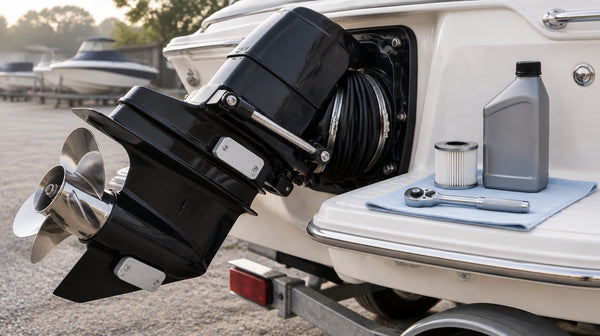
Covering or wrapping is the last step, not the first. Stabilize fuel, change oil, winterize the cooling system, fog the engine and deal with batteries before the boat gets closed up, because getting back to the engine through shrink wrap is a hassle. Our boat winterizing checklist, outboard winterizing guide and MerCruiser winterizing checklist walk through each step. Always check your engine manual for the exact procedure and parts for your model. Shop the full Fall Layup and Winterizing collection for the supplies.
Common shrink wrap and cover mistakes
- No pitch. Flat spots collect water and snow and lead to tears or collapse.
- No vents. A sealed boat sweats all winter and comes out of storage covered in mildew.
- Wrapping a wet boat. Dry the cockpit and pull wet gear first.
- Loose tie-downs. Wind flap wears the cover and can chafe gelcoat.
- DIY heat shrinking near fuel. Open flame heat tools and fuel vapors do not mix. If you wrap it yourself, follow the tool maker's safety instructions, ventilate the boat first and keep a fire extinguisher at hand.
- Using a trailering cover as a winter cover without support. Covers shed water only when they are held up in a peak.
Our picks for winter cover support and storage
All in stock at Boat Supplies Direct.
Cover support poles
Carver Adjustable Support Pole with Boat Vent II: props the cover into a peak and vents moist air out at the top. Pair it with the Carver Adjustable Support Pole with Snap Vinyl End for extra support points across the rest of the deck.
Cover support systems
Camco Adjustable Boat Cover Support Kit spreads support across open runabouts and bowriders, and the Camco Pontoon Boat Cover Support keeps water from pooling on a wide, flat pontoon deck.
Tie-down hardware
Carver Boat Cover Rope Ratchet snugs the hem tight without knots, and Carver Boat Cover Snap Patches add attachment points where your cover rides loose.
Console cover for exposed helms
Carver Poly-Flex II Medium Center Console Cover adds a layer of protection for electronics and the helm. Check the listed dimensions against your console.
Fabric protection and mildew control
303 Marine Fabric Guard restores water repellency on canvas covers before storage, Xanigo Marine Mold and Mildew Preventer treats surfaces before you close up the boat, and Star brite NosGUARD Mildew Odor Control Bags work in cabins and lockers all winter.
Buying parts often? Get Dock Pass.
Free shipping on every order, 5% off eligible products and 60-day returns for $49 a year. See how Dock Pass works.
Frequently Asked Questions
Is shrink wrap better than a boat cover?
For outdoor storage in heavy snow, shrink wrap usually gives better protection because it is tight, pitched and hard for wind to get under. For trailer boats, covered storage or mild winters, a well-supported cover is often the better value because you can reuse it.
How long does a winter boat cover last?
A quality cover often lasts several seasons, and longer if it is supported properly, kept clean, treated with a fabric protectant and stored dry in the off season. Covers that sag and hold water wear out much faster.
Can I shrink wrap my own boat?
Yes, with a DIY kit and a propane heat tool, but it takes practice to get a tight, pitched result. The heat tool is an open flame hazard, so ventilate the boat, keep away from fuel and follow the tool maker's instructions. Many owners pay a yard for the first season and watch how it is done.
Do I need vents in shrink wrap?
Yes. Without vents, moisture gets trapped inside and condenses as temperatures swing, which leads to mildew and odors. Most installers add several vents spread across the wrap.
How do I keep water from pooling on my boat cover?
Use enough support poles or a support system to create a tent shape with no flat spots, tighten tie-downs evenly, and check the cover after heavy rain or snow. Clear heavy snow gently before it builds up.
Should I winterize the engine before covering the boat?
Yes. Finish fuel stabilizing, oil changes, cooling system winterizing and battery care first. It is much harder to reach the engine once the boat is wrapped. Follow your engine manual for the exact steps.
This guide is general information. Storage conditions, snow loads and boat designs vary, so follow your cover or shrink wrap manufacturer's instructions, your storage facility's rules and your engine manual. Use extreme care with open flame heat tools and never use them near fuel vapors.